
Electrical repair
Electrical repair in San Antonio, TX
A breaker that won't stay on, an outlet that quit, lights that flicker when the AC starts: we find the cause and fix it. Work is done by licensed or registered electricians, as Texas law requires.
5.0 rating · 229 Google reviews · as of Nov 9, 2026
- TECL 39574Licensed Texas Electrical Contractor
- 5.0 · 229 Google reviewsAs shown on our Google profile, Nov 9, 2026
- 26+ years on the toolsCombined experience of our electricians
- Permits when requiredPulled and inspected where the city requires
What electrical repair covers
- Breakers that trip or won't reset
- Worn or failed breakers replaced
- Dead outlets and switches
- GFCI and AFCI devices that keep tripping
- Flickering or dimming lights
- Part of the house without power
- Warm outlets, switches or cover plates
- Loose or damaged wiring at devices
- Ceiling fans that wobble, hum or stopped working
- Aluminum branch wiring connections
- Hardwired smoke detectors
- Old fuse boxes
Signs it's time to call an electrician
- A breaker trips again right after you reset it.
- You hear buzzing or crackling from an outlet, switch or the panel.
- An outlet, switch or cover plate feels warm.
- Lights dim or flicker when a large appliance starts.
- You see scorch marks on a plate, plug or cord.
Common causes are explained in our guide to common electrical problems.
Safe checks before you call
- Reset the GFCI outlets. Press TEST, then RESET on the GFCI outlets in the kitchen, bathrooms, garage and outdoors.
- Reset a tripped breaker once. Push it fully to OFF, then back to ON.
- Unplug what was running. If the power went out when something started, unplug it before you reset.
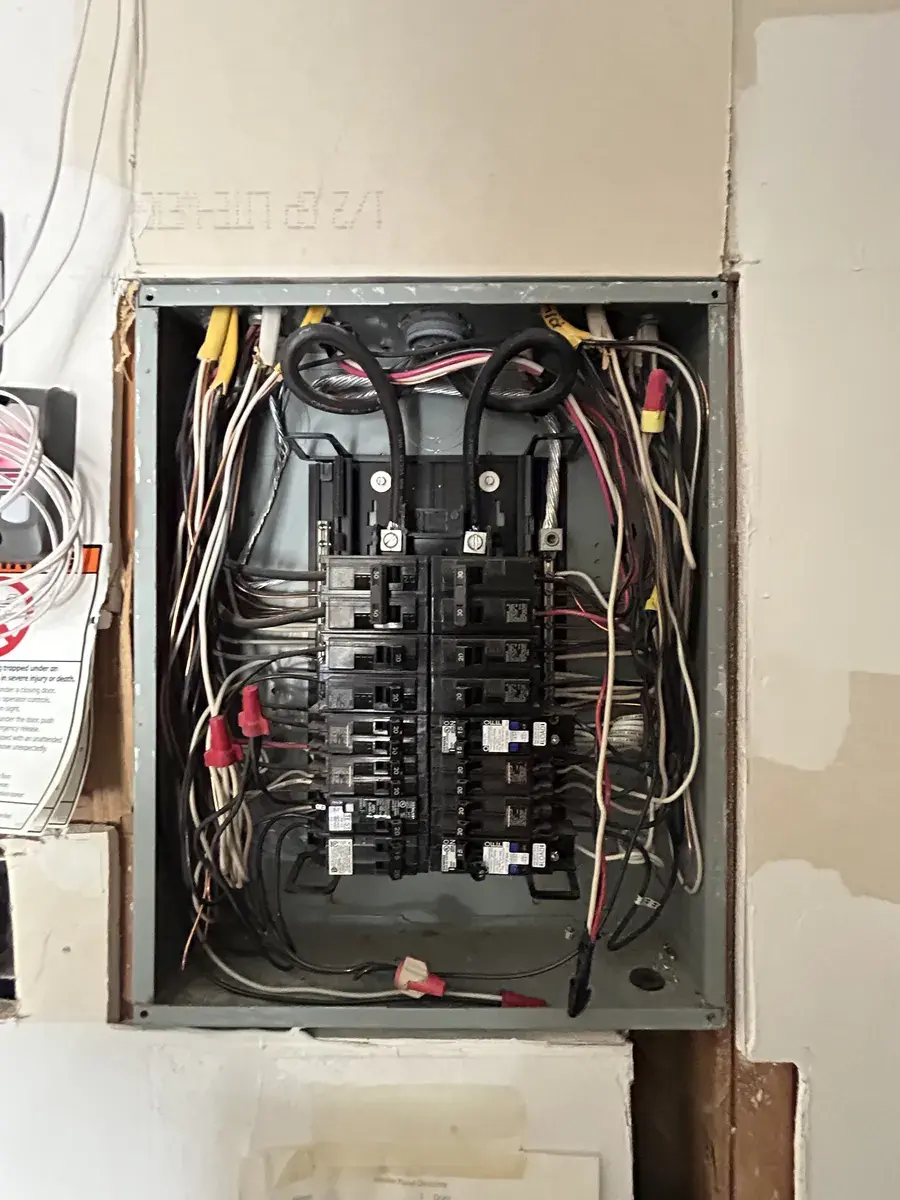
Leave it off and don't open the panel. For fire or immediate danger, call 911.
Common problems and what usually causes them
Flickering or dimming lights
Usually loose wiring connections, an overloaded circuit or voltage swings when a large load starts. We find which one it is and make a permanent repair.
Circuit breakers that keep tripping
An overloaded circuit, a short circuit or a breaker that is failing. We work out why it trips before replacing anything.
Burning smell from an outlet or the panel
Treat it as a fire hazard. Turn off the breaker for that circuit if you can do so safely, stop using it, and call.
Dead outlets or switches
Outlets fail with age, loose wiring or damage. We replace defective devices, repair the connections behind them and check grounding.
Hot or discolored outlets
Warmth or brown and black marks mean arcing or overheating. The outlet gets replaced and the wiring problem behind it repaired.
Buzzing or humming
Electrical parts should be silent. Buzzing points to loose wiring, a faulty breaker or an overloaded circuit.
Shocks from switches or appliances
Faulty wiring or missing grounding. We test the circuit, repair ground faults and confirm the right protection is in place.
Fuses that keep blowing
An old or overloaded fuse system. Converting to a breaker panel is often the lasting fix, and it needs a permit.
Safety devices and older wiring
GFCI and AFCI protection
GFCI protection is required in specified locations such as bathrooms, garages, outdoors and kitchens, as defined by the adopted NEC. AFCI protection applies to many dwelling-unit branch circuits, including bedrooms and other living spaces. What applies to your home depends on the scope of work and the adopted code. We install, test and repair these devices following ESFI guidance.
Aluminum branch wiring
San Antonio homes built in the 1960s and 70s may have aluminum branch wiring, which can overheat at connections. Copper pigtails at each connection, or rewiring, removes that risk.
Smoke detectors
We test, repair and install hardwired smoke detectors.
What affects the cost of a repair
The price depends on what's causing the problem: a worn breaker, an overloaded circuit and a wiring fault are three different fixes. Where the wiring runs and the parts it needs matter too. We talk the cost through with you before any work begins.
Why this isn't a DIY job
Texas law requires licensed electricians for most electrical work. Working on live circuits risks shock and fire, unpermitted work can fail a home inspection, and the visible symptom often isn't the real fault. Our guide on why DIY electrical work is risky covers the full picture, and the CPSC and OSHA both advise against unlicensed electrical work.
Talk to a licensed electrician
Describe the problem and where it is. We call to confirm a time.
How it works
How a repair visit works
Tell us what's going on
Call, or send a short request with the type of work and your ZIP code.
We call to schedule
A timing preference isn't a booked slot. We confirm the time with you by phone.
We find the cause
A licensed or registered electrician looks at the problem and talks you through the options.
Permit when required, then the work
When the job or the city requires a permit, we pull it before the work starts, then arrange any inspection the city requires during or after the work.
FAQ
Electrical repair questions
My breaker keeps tripping. Is that dangerous?
A breaker trips to stop a circuit overheating. One trip after a big load starts can be normal. If it trips again right after a reset, trips with nothing running, or you notice heat, buzzing or a burning smell, leave it off and have an electrician find the cause.
Do I need a permit to replace a breaker?
It depends on the city. In Schertz, repairing or replacing an existing branch-circuit breaker doesn't need a permit, while new wiring, adding an outlet or light fixture, or converting fuses to breakers does.
Why does my GFCI outlet keep tripping?
A GFCI cuts power when it senses current leaking to ground. Moisture, a worn appliance or a wiring fault downstream are common causes. If it trips again after a reset with nothing plugged in, it needs a look.
An outlet feels warm. What should I do?
Stop using it and unplug anything connected if you can do so safely. A warm outlet can mean a loose connection. Call us at 210-760-6407.
Are your electricians licensed and insured?
Good Times Electric LLC is a licensed Texas Electrical Contractor — TECL 39574. Electrical work is performed by properly licensed or registered personnel as required by Texas law. Good Times Electric is fully insured. You can verify TECL 39574 at TDLR.