
Surge protection
Whole-home surge protection in San Antonio, TX
One power surge can damage appliances, electronics and HVAC equipment. A whole-home surge protector helps limit damaging transient overvoltages at your electrical panel, before they reach your devices.
5.0 rating · 229 Google reviews · as of Nov 9, 2026
- TECL 39574Licensed Texas Electrical Contractor
- 5.0 · 229 Google reviewsAs shown on our Google profile, Nov 9, 2026
- 26+ years on the toolsCombined experience of our electricians
- Permits when requiredPulled and inspected where the city requires
Why San Antonio homes need surge protection
A power surge is a spike in voltage above the rated level, sometimes for only a few milliseconds. That's long enough to damage or degrade the microprocessors inside most modern appliances and devices.
Most surges are invisible. They don't trip breakers or flicker the lights; they shorten the life of the refrigerator, the HVAC system, the TV and the dishwasher over time.
San Antonio sees frequent summer thunderstorms, and grid switching on the CPS Energy system and power restoration after outages also send spikes through home wiring. No surge protection can handle every direct lightning strike, but a whole-home device at the panel is one of the most cost-effective protections you can add.
Both layers of protection matter
The Electrical Safety Foundation International recommends a layered approach: a whole-home device at the panel plus point-of-use protection at sensitive equipment.
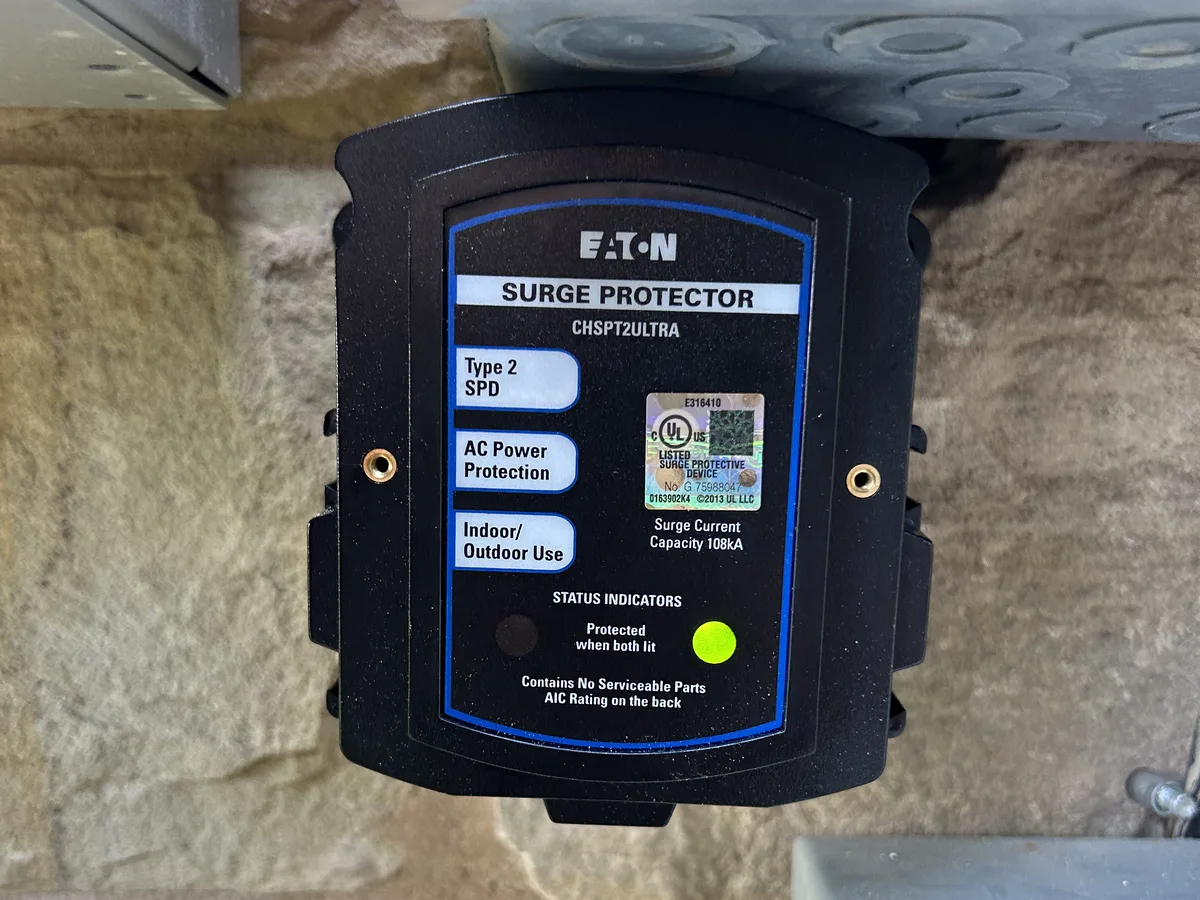
Whole-home surge protector
Installed at the main electrical panel by a licensed electrician, it intercepts large external surges (lightning, utility switching, transformer events) before they enter the home's wiring. It's the only type that protects the whole house at once, including the HVAC system, hardwired appliances and devices that aren't on a power strip. Devices are rated to UL 1449 and must be installed by a licensed electrical contractor per the National Electrical Code.
Point-of-use surge protectors
Power strips and plug-in devices protect individual pieces of equipment at the outlet. They add a second layer against smaller surges generated inside the home, but they can't protect hardwired appliances or the HVAC system and can't stop large surge events on their own. Look for UL-listed units with a clamping voltage under 400V for TVs, computers and home theater equipment.
What causes power surges
Lightning
The most destructive cause. A strike doesn't have to hit the house: a nearby strike can send a surge through power lines or the ground. The U.S. Consumer Product Safety Commission identifies lightning as a major cause of damaging surges.
Utility grid switching
Load shifts across the grid, especially in extreme heat or cold, send small, frequent spikes into connected homes. They add up over time on microprocessor-based appliances.
HVAC and large motors
Air conditioners, refrigerators, dryers and pool pumps contain large motors. When they cycle off, the energy redirects through the home's wiring as a spike, and in San Antonio's climate the AC cycles many times a day.
Downed lines and outage restoration
Storms, accidents and falling trees can bring down lines, and returning power after an outage can briefly run high. Both are common causes of appliance damage.
Faulty wiring and bad connections
Loose connections and aging wiring can arc, creating local surges and a fire risk. In an older home, fix those problems alongside adding surge protection.
What's at risk
- HVAC system and heat pump
- Refrigerator and freezer
- TVs and entertainment systems
- Computers and monitors
- Smart home devices and hubs
- Washer and dryer
- Dishwasher and microwave
- Smart lighting and dimmers
- Security systems and smart locks
- EV charger and charging equipment
How we install it
- Assessment. We check your panel type, amperage and existing protection, and look for loose connections or outdated breakers to fix first.
- Estimate. Device, labor and materials, with the right tier of protection for your home and equipment.
- Panel-level installation. We mount the surge protective device at the main panel, connect it to NEC standards and verify the grounding, the step most often skipped.
- Testing and documentation. We test the device and connections and give you the installation details and the device's specifications for your records.
Device tiers
Cost depends on the device tier and your panel configuration. Every tier is a UL 1449-listed device installed at the panel.
Standard protection
Handles surges up to 40kA. Suitable for most homes.
Enhanced protection
Handles surges up to 80kA, with an LED status indicator and surge alarm. A good fit for smart homes and EV chargers.
Maximum protection
Handles surges of 120kA and more, with LED status and an audible alarm. For large homes, solar systems and EV setups.
Check your homeowner's insurance policy: some insurers offer discounts for whole-home surge protection. We can give you documentation of the installation.
FAQ
Surge protection questions
What a protector at the panel does and doesn't cover, and what the install involves.
How much does whole-home surge protection cost?
It depends on the device tier and your panel configuration. Call 210-760-6407 and we'll talk through the right tier for your home.
Does a whole-home surge protector replace my power strips?
No. The panel device stops large external surges from lightning and the utility grid; point-of-use protectors add a second layer against smaller internal surges. ESFI recommends using both.
Will a whole-home surge protector protect my HVAC system?
Yes, and it's one of the main reasons to install one. The HVAC system is hardwired to the panel, so plug-in power strips can't protect it. Some HVAC manufacturers also ask for proof of surge protection on new systems.
Does homeowner's insurance cover surge damage?
Many policies cover lightning-caused surge damage, but coverage for grid and internal surges varies by insurer, and a deductible may equal the cost of a damaged appliance. Check your policy.
How long does installation take?
Most installations take 1 to 2 hours: mounting the device at the main panel, making the connections to NEC code, verifying the grounding and testing.
Can I install a whole-home surge protector myself?
No. It means working inside a live electrical panel, and Texas law requires a licensed electrical contractor for panel-level work.
Do newer homes need surge protection?
Yes. Newer homes have more microprocessor-controlled equipment (smart appliances, home automation, EV chargers, smart HVAC), which is more sensitive to voltage spikes. Surge protection for dwelling units is addressed by the current NEC as adopted by Texas and local requirements.
Protect your home before the next storm
Tell us about your panel and what you want protected. We call to confirm a time.